
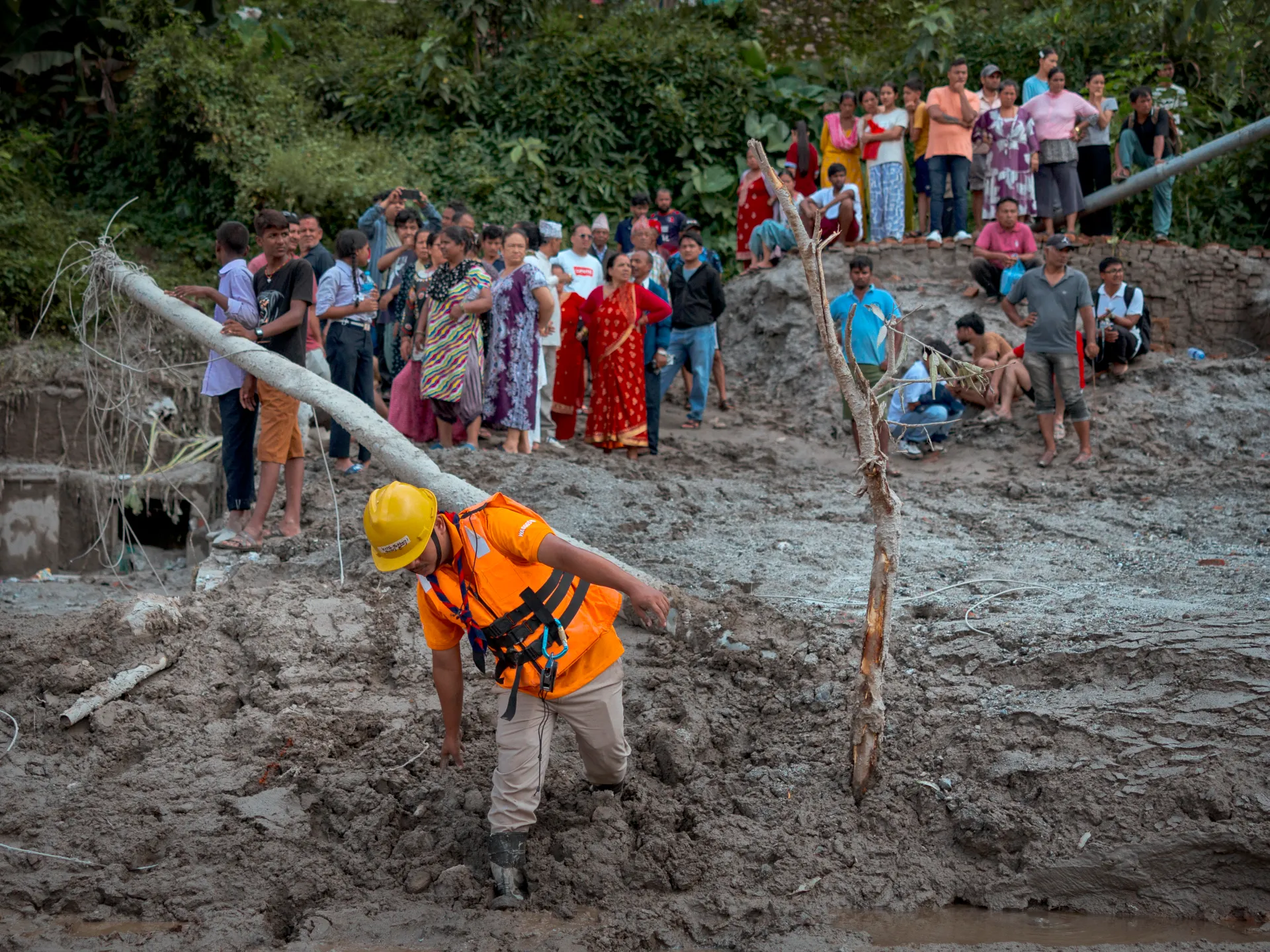
The death toll from a catastrophic series of floods and landslides along the border of Nepal and China has climbed to at least 734, leaving thousands more missing in the wake of a massive glacial collapse. The disaster began when a glacier high in the Himalayas gave way, sending torrents of water and debris crashing down through the Trishuli and Bhotekoshi river systems, burying entire towns and villages. The scale of the tragedy is immense, with authorities from both nations estimating that upwards of 3,000 people remain unaccounted for, while some victims have washed up as far away as neighboring India.
One of the most desperate focal points of the rescue effort involves nearly 950 workers who vanished from eleven hydropower project sites across Nepal’s Rasuwa and Nuwakot districts. These crews, consisting of citizens from Nepal, India, South Korea, and China, were caught in tunnels and construction zones that were instantly overwhelmed by mud. While the Nepali Army has successfully saved hundreds at certain locations, other sites like the Chilime Hydropower project remain inaccessible due to thick layers of sediment. A specialized joint task force is currently fighting adverse weather conditions to dig through rubble in hopes of finding survivors trapped underground.
International cooperation has ramped up as India sends medical experts and tunnel rescue specialists to assist in the treacherous terrain. Meanwhile, officials in Tibet report that hundreds of foreign nationals from over twenty different countries are still missing on the Chinese side of the border. This includes significant numbers of American, British, Latvian, and Indian citizens. Monitoring continues via satellite and drone technology after a temporary halt in searches occurred last week due to fears that a newly formed barrier lake might burst and trigger another wave of flooding downstream.
Back in Nepal’s urban centers, the crisis has shifted toward a grim logistical struggle. Local morgues are reportedly overflowing as unidentified bodies continue to wash ashore far downstream from the initial collapse. Government officials admit they lack sufficient refrigeration units to preserve remains for DNA testing and identification purposes. As bodies are distributed across twenty-one different hospitals for storage, families continue to wait for news amidst one of the region’s deadliest environmental disasters in recent history.