
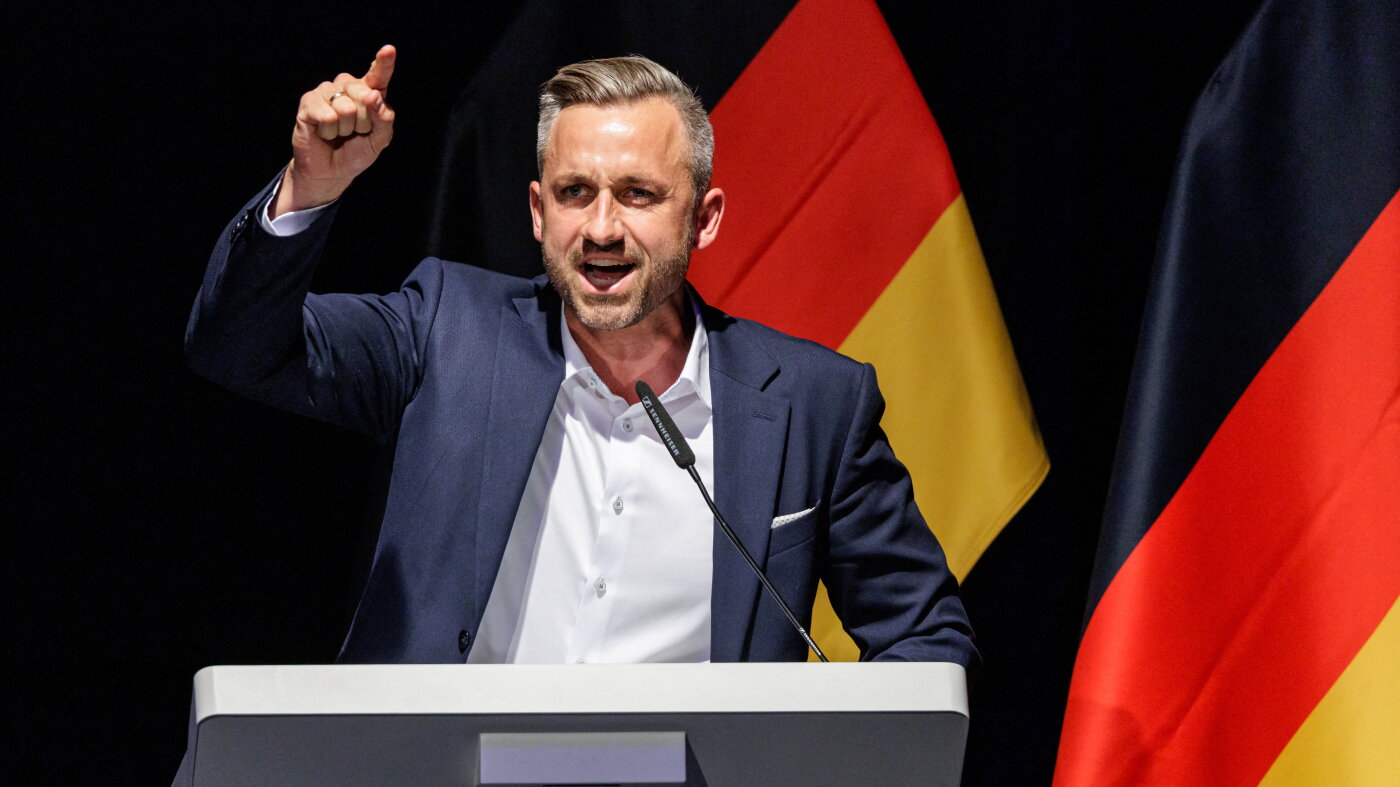
In the eastern state of Saxony Anhalt, a new kind of political campaigning is taking hold as the far right Alternative for Germany party surges toward a potential historic victory. Leading the charge is Ulrich Siegmund, a thirty five year old former marketing professional who has traded traditional stump speeches for the curated world of TikTok. With an immaculate image characterized by crisp white shirts and a constant, winning smile, Siegmund represents a modernized face of the AfD. His approach is less about grim warnings and more about personal connection, often answering voter questions from his back porch to project an aura of accessibility and optimism.
Despite the polished exterior, Siegmund’s platform remains rooted in hardline nationalism. He frequently targets immigration, arguing that bringing in foreign healthcare workers is unacceptable while German doctors seek opportunities abroad. While his social media presence focuses on high energy pep talks rather than dense policy papers, the underlying agenda involves mass deportations and strict cultural restrictions. This juxtaposition of affability and extremism is precisely what attracts undecided voters like Alexander Winsek, an aviation engineer who finds Siegmund’s youthful energy refreshing compared to the doom and gloom typically associated with far right politicians.
However, not everyone is swayed by the digital charm offensive. Hannes Kreschel, a twenty three year old law student and former AfD supporter, now spends his time attending rallies to challenge voters with factual contradictions regarding the party’s economic plans. Speaking over beer and bratwurst, Kreschel attempts to peel away supporters by highlighting how nationalist visions often clash with reality. Though he faces hostility from some campaigners, he hopes that showing another young person’s disillusionment can act as a catalyst for others to rethink their allegiance to the movement.
Political analysts suggest that this rise isn’t necessarily a rejection of democracy itself but rather a symptom of its perceived failure. Marcel Lewandowsky, a researcher at Martin Luther University Halle Wittenberg, notes that many AfD voters still believe in democratic principles but feel that current institutions have abandoned them. By framing themselves as the voice of the silent majority against an unresponsive establishment, the AfD has created a powerful narrative that resonates beyond just one region. If they secure power in Saxony Anhalt, it would mark the first time a far right party has led a German state government since World War II, signaling a profound shift in the nation’s political landscape.