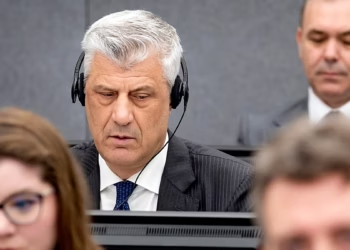
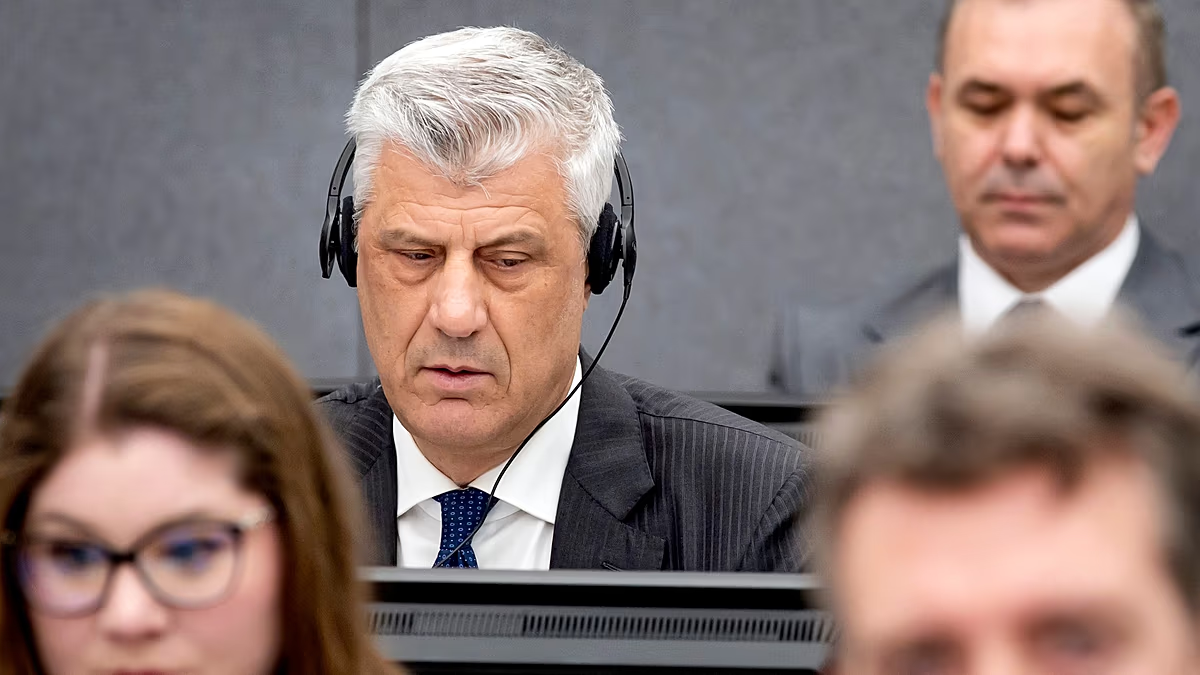
Former Kosovo President Hashim Thaçi has been sentenced to 25 years in prison following a landmark conviction for war crimes at the Kosovo Specialist Chambers in The Hague. Standing in silence as the verdict was read, Thaçi was found guilty of murder, torture, cruel treatment, and arbitrary detention during the conflict for independence from Serbia. Presiding Judge Charles Smith noted that Thaçi leveraged his high standing and authority to facilitate these crimes, specifically targeting those viewed as traitors or political rivals, though the judge clarified that the ruling does not challenge the overall legitimacy of the Kosovo Liberation Army or its pursuit of independence.
The sentencing concludes a grueling three year trial involving four former guerrilla leaders. Alongside Thaçi, Jakup Krasniqi received 25 years, Kadri Veseli was sentenced to 18 years, and Rexhep Selimi received 13 years. While they were cleared of charges regarding crimes against humanity due to insufficient evidence of a systematic attack on civilians, the court ruled they contributed significantly to a joint criminal enterprise that resulted in dozens of murders and the abuse of hundreds of detainees. Despite pleading not guilty throughout the process, the quartet now faces lengthy terms for their roles in eliminating political obstacles through violence.
For many in Kosovo, the verdict marks a jarring fall from grace for a man once hailed by U.S. officials as the George Washington of his nation. Once an immensely popular figure who oversaw the 2008 declaration of independence and served as both prime minister and foreign minister, Thaçi’s legacy had already been clouded by reports of organized crime and corruption before his eventual surrender to the court in 2020. His supporters had maintained unwavering faith in his innocence, setting up countdown clocks in city squares and organizing massive rallies in Prishtina in anticipation of his release. However, those crowds vanished almost instantly once it became clear that he would remain behind bars.
The ruling has sparked immediate backlash from Kosovar officials, with Foreign Minister Glauk Konjufca describing it as an unjust decision for the country’s liberation struggle. This reaction reflects a broader resentment toward the EU backed court, which critics argue is biased due to its reliance on evidence provided by Belgrade. While defense lawyers argued that a loose command structure meant senior leaders could not be held responsible for individual soldiers’ actions, the judges disagreed. As Thaçi begins his sentence with time already served during detention counted toward his term, he still faces an upcoming second trial focused on charges of obstruction of justice.