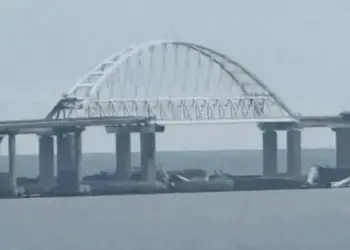
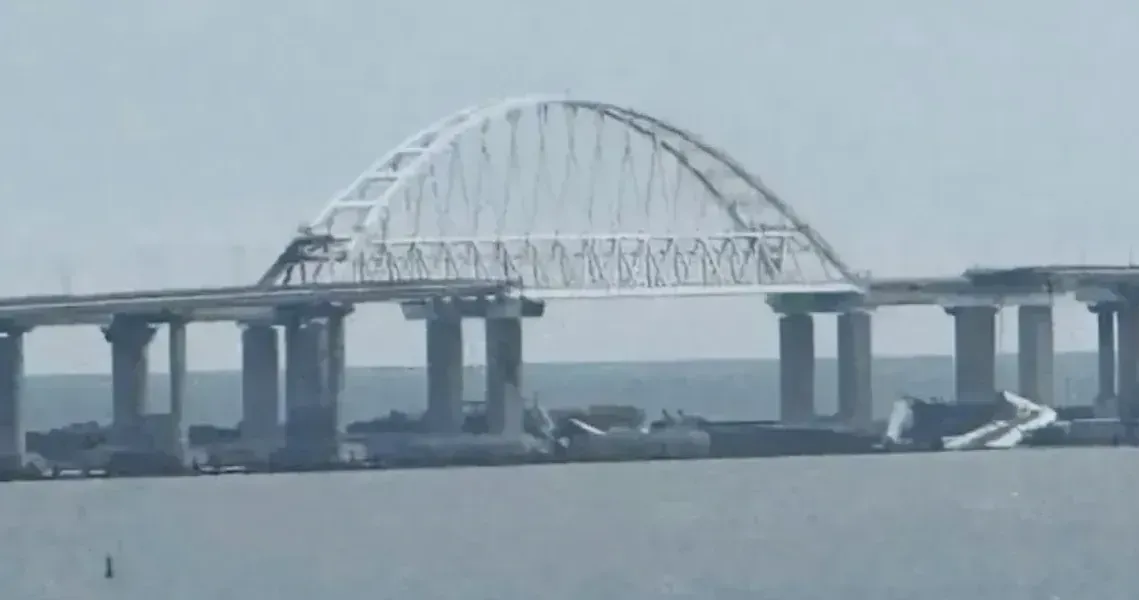
In a daring and sophisticated series of strikes, Ukrainian forces have dealt a major blow to one of President Vladimir Putin’s most cherished symbols of power. The Kerch Bridge, the massive twelve mile road and rail link connecting mainland Russia to occupied Crimea, suffered significant structural failure following back to back attacks on Monday and Tuesday. Visual evidence geolocated by NBC News shows a section of the bridge collapsed into the water, while Ukraine’s Security Service confirmed that a metal arch and road span were completely destroyed alongside damage to the railway tracks.
For President Volodymyr Zelenskyy, the operation represents a calculated retaliation for Russia’s ongoing campaign against Ukrainian civilian infrastructure. Describing the strike as an unprecedented operation, Zelenskyy explained that it was the culmination of a multi week effort involving the systematic destruction of Russian air defenses and radar systems to clear a path for the missiles. By targeting the bridge, Kyiv is sending a pointed message that Russian aggression will eventually reach back to its point of origin, particularly as Russia continues to target power grids and bridges within Ukraine.
Beyond its immense symbolic value as Putin’s flagship project to cement control over Crimea, the bridge serves as a critical logistical artery for the Russian military moving supplies into the peninsula. While some rail traffic has reportedly begun to resume via alternative means like ferries, the disruption creates an immediate headache for Moscow’s logistics. Military analysts suggest that debris from the collapse may also temporarily block essential shipping lanes between the Sea of Azov and the Black Sea, turning what was once a strategic advantage for Russia into a restrictive bottleneck.
The Kremlin has attempted to downplay the severity of the hit, with spokesperson Dmitry Peskov insisting that the structure will be restored and improved upon. However, the timing is particularly awkward for Putin, coming just ahead of high stakes meetings with leadership from China and the United States. As Russia opens criminal cases labeling the event a terrorist act, both nations remain locked in an escalating cycle of violence, trading blows against vital energy and transport networks even as international diplomatic efforts struggle to find common ground.