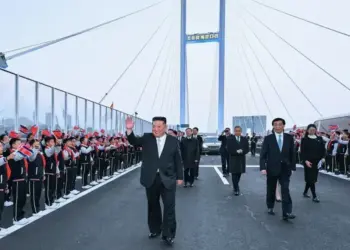
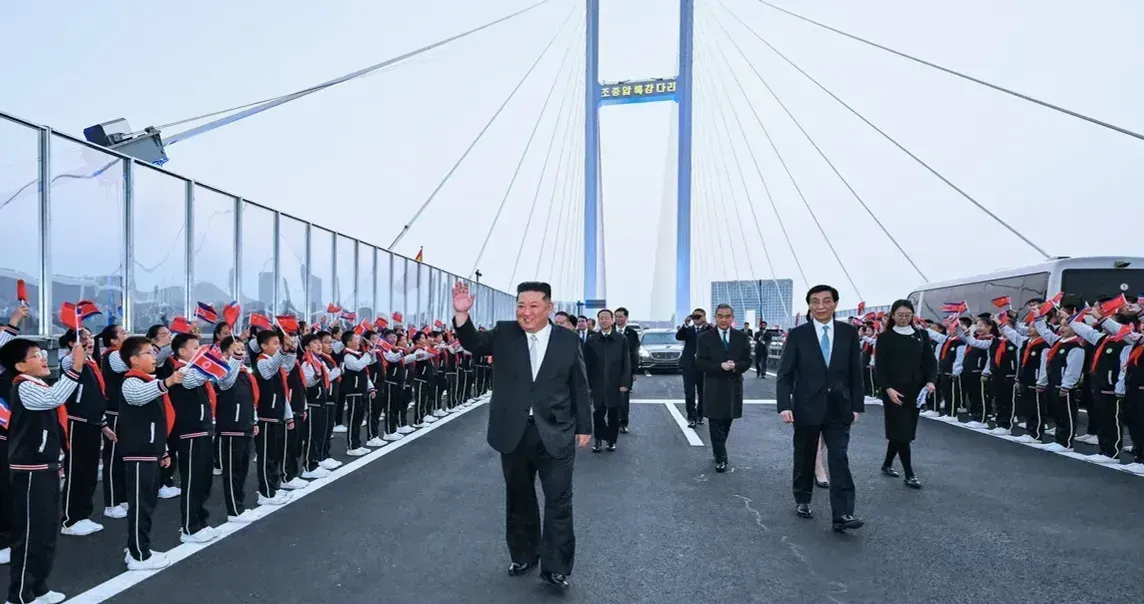
North Korean leader Kim Jong Un made a high profile return to China this past Saturday, marking his first visit to the neighboring country in a year. The centerpiece of the trip was the inauguration of a new bridge connecting the two nations, a physical symbol of renewed diplomatic efforts. Crossing into the border city of Dandong, Kim signaled a clear intent to strengthen bonds with Beijing as he navigates an increasingly tense global landscape that he describes as a new Cold War.
During his stay in Dandong, Kim focused heavily on shared history and industrial growth. He visited a memorial dedicated to China’s role in the Korean War, where he spoke emotionally about a friendship forged through sacrifice and blood. Alongside Chinese officials including Wang Huning and Foreign Minister Wang Yi, Kim also toured a local car factory, suggesting that economic cooperation remains a priority for Pyongyang as it looks to stabilize its internal economy.
The timing of the visit suggests a strategic pivot for North Korea. While Kim has spent much of the last year deepening military and political ties with Vladimir Putin’s Russia—even sending troops and weaponry to aid the invasion of Ukraine—this trip indicates he is not willing to neglect his most vital economic lifeline. By balancing relations between Moscow and Beijing, Kim appears to be constructing a unified front designed to counter American influence in Asia.
As he departed across the newly minted span over the Yalu River, Kim described the structure as more than just infrastructure, claiming it would serve a historic mission by joining the minds of both populations. For China, welcoming back the North Korean leader represents an opportunity to reclaim some of its own leverage over Pyongyang after watching Russia take center stage in recent months.