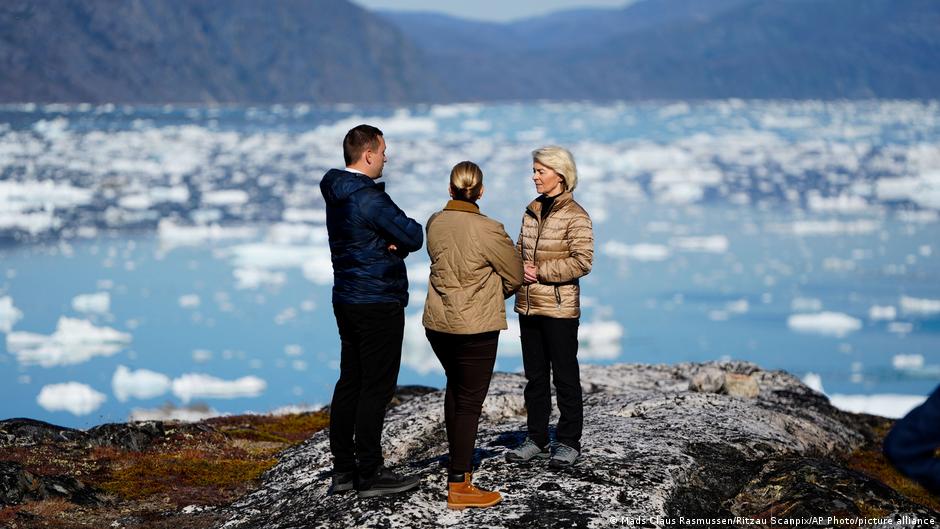
European Commission President Ursula von der Leyen has unveiled a substantial financial commitment to Greenland, pledging an investment package worth 200 million euros to strengthen ties with the Arctic territory. During a two day visit to the capital city of Nuuk, von der Leyen met with Danish Prime Minister Mette Frederiksen and Greenlandic Prime Minister Jens-Frederik Nielsen to outline a partnership focused on expanding connectivity, advancing clean energy initiatives, and securing critical raw materials. The funding is slated for deployment over the current and coming year, marking a significant effort by the EU to deepen its cooperation with the autonomous island.
The timing of this diplomatic mission carries heavy geopolitical weight, arriving shortly after former U.S. President Donald Trump suggested that the United States needs total access to Greenland for national security reasons. In response to those pressures, von der Leyen used a joint press conference to firmly assert that territorial integrity and the inviolability of borders are fundamental tenets of international law. She made it clear that any decisions regarding Greenland’s future belong solely to the people of Greenland and Denmark, effectively pushing back against foreign ambitions toward the territory.
As climate change continues to melt Arctic sea ice, new shipping lanes are opening and vast mineral deposits are becoming accessible, turning the region into a strategic flashpoint for global powers including Russia and China. While Trump has claimed that Denmark cannot sufficiently defend the area from foreign influence, both Copenhagen and Nuuk have consistently rejected such assertions. For the EU, which saw Greenland depart from its ranks in 1985, this latest move represents a tactical shift toward ensuring stability in the North Atlantic while securing essential resources needed for Europe’s green transition.
Prime Minister Jens-Frederik Nielsen welcomed the initiative as a way to enhance an already close friendship between his country and the European Union. By prioritizing satellite communications and renewable energy alongside mining interests, the EU hopes to provide tangible economic opportunities for Greenland’s small population of roughly 57,000 residents. This strategic alignment not only bolsters local infrastructure but also serves as a collective signal of European unity in an increasingly contested polar landscape.